
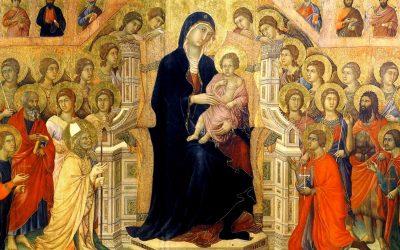
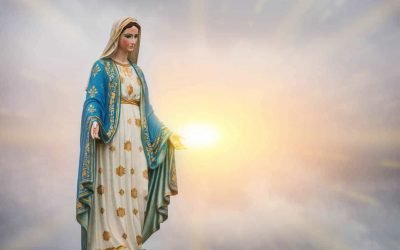
I have experienced conversing gently and respectfully with learned Roman Catholics regarding some theological differences. And one of the most delicate issues that could be involved in this highly sensitive topic on Mary, the mother of Jesus Christ in his humanity form, is their emotion towards her. What is the truth behind this Roman Catholic practice? Is Mary truly called the Mediatrix of all graces? How can we explain the truth to them?
The Roman Catholic Church have a fine way of defining their practice with regards to their physically dead saints and Mary. They explain their prayers to the dead saints as dulia (veneration), to Mary the mother of Jesus in his humanity as hyperdulia (special and high form of veneration), and finally to God as latria (worship). I understand what veneration means respect. In fact, Protestants also respect their heroes in the faith despite them being physically dead. We talk about their lives and learn from their teachings. However, we would not go as far as the Roman Catholic people will go in talking to their dead members. They need to accept the fact that the Bible abhors this practice of necromancy (the practice of communicating with the dead people).
The Israelites were warned not to do this practice in Leviticus 19:31 saying, “Do not go for advice to people who consult the spirits of the dead. If you do, you will be ritually unclean. I am the LORD your God”.1 I know that they would say, “But what God abhors is necromancy. However, we are not doing such practice.” The mere fact that one talks to a dead person whether directly in the form of “prayer” or indirectly in the form of mediumship is still necromancy. This practice of the Roman Catholic in venerating their physically dead saints and Mary is a means of clothing necromancy with a form of Christianity.
Some Roman Catholic apologists even went further by saying, “They are not dead but spiritually alive. Therefore, it is possible to talk to them asking their intercessory.” I fully understand that Paul, Luke, Matthew, and the many New Testament saints are spiritually alive. But in the Scripture, never can we read these kind of practice even through inference. When Stephen was martyred, did the believers prayed to him after his death? When John was beheaded, did the disciples ask for his intercession? What we can see from the Scripture are living saints interceding for living saints. When Peter was imprisoned, the Scripture says, “earnest prayer for him was made to God by the church”.2 The verse says “to God” not to any dead saints. Surprisingly, despite the teaching of the Scripture that “there is one mediator between God and men, the man Christ Jesus”3 they even included Mary on the roster.4 They even defended the role of Mary as the “Mediatrix of all graces.” According to Catholic Answers, an apologetics site for Roman Catholics, they stated,
“God permitted the Redemption of mankind to depend on the free-will decision of a human being. Whether or not we would have a mediator was dependent on Mary’s “yes.” Had there been no ‘yes’ from Mary, there would have been no mediator. Thus the graces that come through Jesus may be said to come to us, in a secondary way, via Mary—not as the origin of the graces, but as a conduit. The Catholic Church always has taught that Jesus Christ alone redeemed mankind (neither Mary nor any other creature had the power to do so), and ultimately only through him are salvation and grace obtained.”5
The argument of the writer is not Scriptural instead he uses human reasoning. It is a fact that the Messiah will be born by a virgin, no one can deny this. And Mary was the one who fulfilled the prophetic Scriptures. However, it is not Scripturally right to give Mary that position as a conduit of graces that came through Jesus because the Bible is very clear that believers can approach the throne of grace with confidence to receive mercy and grace in time of need.7 At the same time, it is not true that the Roman Catholic institution “always has taught that Jesus alone redeemed mankind” saying that “neither Mary… had the power to do so.” Pope Benedict XV elaborated Mary’s role in the redemption along with her son saying,
“Thus, she (Mary) suffered and all but fied along with her Son suffering and dying; thus, for the salvation of men she abdicated the rights of a mother toward her Son, and insofar as was hers to do, she immolated the Son to placate God’s justice, so that she herself may justly be said to have redeemed together with Christ the human race.”8
Dr. Anthony Pezzotta, was a former Director of Schools and Seminaries, as well as a Rector of Local Salesian Communities. In his book Truth Encounter, he explained carefully that the attachments of Roman Catholics to Mary are more of emotional than doctrinal. He use a good illustration just to drive his point to a Roman Catholic friend who’s open for a dialogue. Dr. Pezzotta’s example is an eye-opener below,
“Suppose you you are found to have a stomach cancer; and the doctors urgently suggest surgery. They take you to the hospital and prepare you, but before the anesthesiologist puts you under, the nurse approaches and whispers:
‘Sir, the surgeon is not here, but his mother is around!’
‘Is his mother a surgeon, too?’
‘No, she is a lawyer. But if her son is such a good surgeon, do you expect his mother to be good for nothing?’”
This illustrates the folly of attributing to Mary what belongs to her Son, Jesus. And yet, it has happened.”9
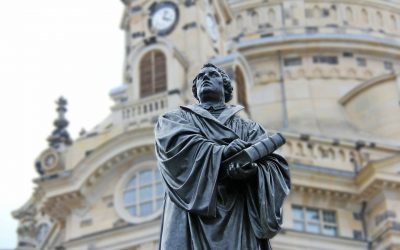
Dr. Pezzotta also assured his friend saying, “far from thinking that Mary is ‘good for nothing,’ we count her blessed among all women. She, alone, was privileged to be the mother of our Redeemer.”10 There are many Old and New Testament saints that are also blessed and privileged in serving the Lord in their lifetime like David, Moses, Hezekiah, Nehemiah, Paul, Timothy, Peter, and others. They became good examples of how we should live our lives as followers of God. This also includes the numerous Christian believers who live before us in the past like Martin Luther, John Calvin, Jacobus Arminius, Smith Wigglesworth, Rev. Billy Graham, Carman, Dr. Larry Crabb and many others. Their lives are worth emulating, but they are never to be placed as a go-between to usurp the position of the Lord Jesus Christ as the one and only mediator between us and God less we become guilty of necromancy. The position of being the mediator only belongs to Jesus Christ alone who died and saved us.
Footnotes:
1 Good News Bible
2 Acts 12:5
3 1 Tim. 2:5
4 This practice of veneration to Mary were added approximately after 150 years as Dr. Lorraine Boettner explained in his book Roman Catholicism published by The Presbyterian and Reformed Publishing Company.
5 Catholic Answers, “Mary the Mediatrix of All Graces.”
6 See Isaiah 7:14
7 See Heb. 4:16
8 Eamon R. Carroll, “Mary in the Documents of the Magisterium,” in Mariology, Vol. 1, ed. Juniper B. Carol (Milwaukee: Bruce Publishing Company, 1955), 37.
9 Anthony Pezzotta, “Truth Encounter: catholicism and the Holy Scriptures,” (Manila: Church Strengthening Ministry, 1995), 135.
10 Pezzotta, Truth Encounter, 134
Co
0 Comments