
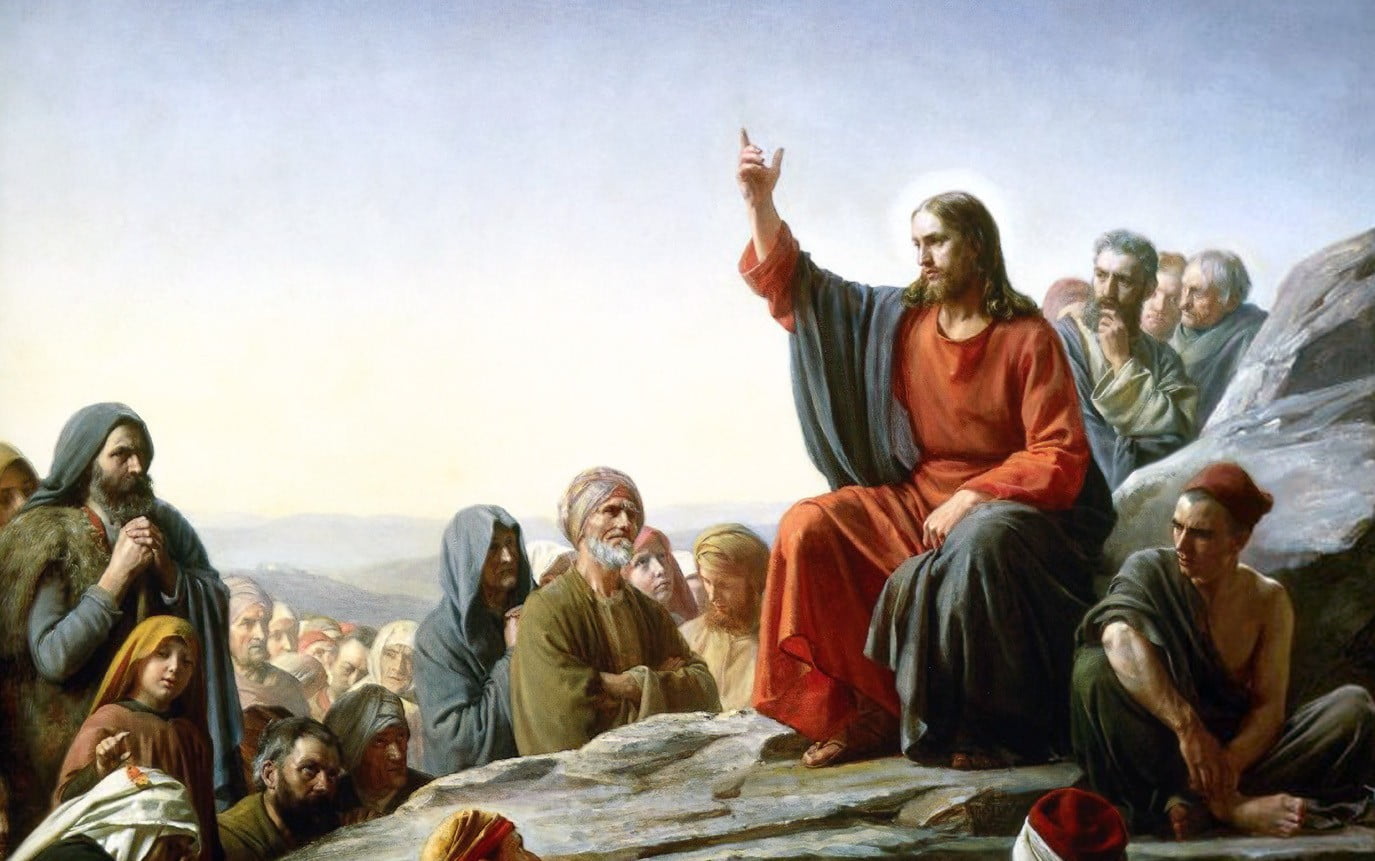
One time, I was eating at McDonalds when I chance upon two Jehovah’s Witnesses near my table. I heard them talking to each other that I respectfully introduce myself then proceed to ask them some questions. I asked why their Governing body inserted the word “other” five times in their Colossians 1:16-20, New World Translation. And one of them quickly said, “If they will not do that then the passage will surely show that Jesus is the Creator of all things.” And I said smilingly, “Actually, that is what the apostle Paul is trying to tell the reader, that Jesus Christ is the Creator of all things, and He is not a creature.”
There are many cults of Christianity who wrongly believed that Jesus Christ is a “creature created” by His Father the Creator. And according to them, this is the will of God to worship Him. It is true, that it is the will of God to worship Jesus Christ. But is it the will of the Father to worship Jesus as a creature? How can we unite this practice of worshipping Jesus with the Old Testament command of not worshipping created things? If any person makes the mistake of identifying the nature of Jesus Christ then they will either honor Him as they honor the Father or be guilty of dishonoring the Father by dishonoring the Son of God by relegating Him to be a created being just like anybody else.
Many are citing Colossians 1:15 thinking that the word “firstborn” means Jesus was created. But a careful study of the Greek word along with its context in this verse will reveal the term “firstborn” was never meant by Paul as “first created” but position.
Although, the Greek word for “firstborn” can also literally mean “first one born” in the case of Luke 2:7 where Mary gave birth to Jesus in His human nature. In Colossians 1:15, it will be absurd to think that this is what Paul really meant since he is highlighting Christ as the Creator of everything. You will notice the word “for” in the next verse (v. 16) that brings out the meaning, stating that all things owe their existence in Christ. Since “firstborn” could mean literally as the first one born, there is never in the Scripture that it mean “first one created.” In the LXX, the Greek translation of the Old Testament, the term “firstborn” was used in 130 instances of which 74 are in the Pentateuch and 29 in 1 Chronicles. It may refer to humans or animals where God has a claim.
You will notice in Exodus 4:22-23,
“Then you shall say to Pharaoh, ‘Thus says the LORD, Israel is my firstborn son, and I say to you, ‘Let my son go that he may serve me.’ If you refuse to let him go, behold, I will kill your firstborn son.’”
Notice, that Israel was referred to as the “firstborn” but Israel was not the first nation that was created nor come into existence. Many nations came into existence before Israel became a nation. The nation of Israel became Israel because this is the nation who responded to God and the people whom God has chosen eventually. They became a pre-eminent nation and one in priority. If this is the case, then the interpretation that “firstborn” means “first one created” will surely fall into pieces.
In Genesis 41:51, the use of the “firstborn” is literal where Manasseh is the first one born.
“Joseph called the name of the firstborn Manasseh. ‘For,’ he said, ‘God has made me forget all my hardship and all my father’s house.”
However, you will also notice that God said Ephraim is described as the “firstborn” despite him being younger than Manasseh,
“And Israel stretched out his right hand and laid it on the head of Ephraim, who was the younger, and his left hand on the head of Manasseh, crossing his hands (for Manasseh was the firstborn).” Genesis 48:14
“With weeping they shall come, and with pleas for mercy I will lead them back, I will make them walk by brooks of water, in a straight path in which they shall not stumble, for I am a father to Israel, and Ephraim is my firstborn.” Jeremiah 31:9
If this is the case, then “firstborn” in it’s proper context can also mean “first in rank” and “supreme” in position among among everyone. In reference to Colossians 1:15, The Theological Dictionary of the New Testament states,
“The point, then, is not that Christ is the first creature. This would demand a stree on the ‘tokos’ and would also bring birth in conflict with creation. What is stated is Christ’s supremacyover creation as its mediator. The term prototokos is used, then, because of its importance as a word for rank.” (pg. 968)
In other words, Christ being the mediator of the first creation which is the universe, He is also the mediator of the new creation with His resurrection from the dead (see Col. 1:18). If the apostle Paul truly meant “first created” then he should have use the Greek word prototisis which he did not in reference to Christ. This is because Paul wanted to put a delineation between Christ the Creator and His creation when he wrote,
16 For by him all things were created, in heaven and on earth, visible and invisible, whether thrones or dominions or rulers or authorities—all things were created through him and for him. 17 And he is before all things, and in him all things hold together. Colossians 1:16-17
If Jesus is a creature, it is not logical for Him to “hold all things together” for only a Creator can rightfully do that. Truly, Jesus is not a creature but the Creator equal in nature to His Father and the Holy Spirit. The writer of the book of Hebrews is careful to tell us that Jesus’ body was prepared, or if you would like to use the term “created,” but not Him as a Person.
“Consequently, when Christ came into the world, he said, “Sacrifices and offerings you have not desired, but a body have you prepared for me.” Hebrews 10:5
If we will be faithful to Colossians 1:15, Paul explained clearly that Jesus was before all things that were created. And that all created things were created through Jesus and for Jesus.1 And Jesus is before all things that were created, and in Jesus all created things hold together. If Jesus Christ is a creature created by His Father, how can he do these things? This will only make sense if you place Jesus as supreme, prime, and high in rank than all the creation because He Himself raise His body from the grave. Who among all the creatures raise their body from the grave except Jesus Christ alone (see Jn. 2:19) And this is what Paul meant when he use the Greek word prototokos. It is true that the Father’s will is to worship His Son Jesus Christ. There is no doubt about this. But unless the cults recognized that Jesus is the Creator of all things worthy of worship then they will surely be guilty of creature-worship or neo-paganism hiding under the cloak of Christianity. This practice will never reflect biblical monotheism.
“because they exchanged the truth about God for a lie and worshiped and served the creature rather than the Creator, who is blessed forever! Amen.” Romans 1:25
Yes, many religious cults such as the Iglesia Ni Cristo, Jehovah’s Witnesses, Christadelphians, and many Unitarian groups are misinterpreting the passage in Colossians 1:15 without truly understanding the meaning of the Greek word prototokos. And it is our hope that they will stay true to the truth of God’s word rather than embrace their belief system.
Footnote:
1 The Greek word dia is rightly translated as “through” instead of “by” because it is followed by a noun in the genitive case, that is, δι αυτου. (See Verlyn D. Verbrugge. New International Dictionary of New Testament Theology. Zondervan. 2000. pp. 132-133) It seems the word portrays Jesus as a channel or bridge for all things to exist which seems to diminish Jesus’ identity. However, a careful study of the passage will also reveal that Paul wrote, “For by him all things were created” proving that Jesus Christ created all things. In fact, a good number of passages informs us that Jesus Christ created everything in Romans 11:36; Colossians 1:16 and Hebrews 2:10. Furthermore, we need to understand that God the Son did not create everything alone but also includes the rest of the Persons in the divine Trinity, such as, God the Father (Genesis 1:1; Isaiah 44:24; Mark 10:6) and God the Holy Spirit (Job 33:4).



0 Comments